Wool gloves by micron count: fineness, liners, and warm fingertips
Gloves are the wool garment with the strictest comfort threshold: no shirt sleeve stands between the fiber and the skin, contact pressure is constant, and fingertips are among the most touch-sensitive skin on the body. A wool sweater at 22 microns feels fine over a tee; the same fiber as a glove feels pricky within the hour. Micron count — the average diameter of the wool fiber — is therefore the central spec for gloves, joined by two more that labels rarely volunteer: knit gauge and liner construction. This guide works through all three, plus how wool pairs with leather palms and which weight suits which winter.
Short answer
For gloves worn directly on bare skin, merino at 19 microns or below — ideally 18.5 and under — is the comfort bar; anything coarser needs a liner or a cotton blend to be wearable all day. Warmth is a separate axis set by knit density and layering, not by micron. The strongest winter constructions pair a fine-merino knit or liner with a leather palm or shell, which blocks wind where wool alone cannot.
What micron measures, and the glove thresholds
A micron is a micrometer — one millionth of a meter — and wool fiber diameter is measured as an average across thousands of fibers. The scale runs from ultrafine merino near 15 microns to coarse carpet wools above 30, and the number predicts prickle: fine fibers bend easily when pressed into skin and trigger fewer of the nerve endings that register as irritation. Human hair, for calibration, averages around 70 microns, so even coarse wool is far finer than hair — but fingers notice the difference hair does not.
| Grade | Micron range | In gloves |
|---|---|---|
| Ultrafine merino | under 15.5 | Luxuriously soft; premium liners and next-to-skin knits |
| Superfine merino | 15.5-18.5 | Comfortable for nearly all wearers, all day |
| Fine merino | 18.5-20 | Comfortable for most; the practical standard for knit gloves |
| Mid-micron merino | 20-23 | Fine in mittens worn over liners; borderline direct-to-skin |
| Lambswool / conventional wool | roughly 24-30 | Pricky without a liner; traditional glove territory |
| Coarse wools | 30+ | Rug-grade; not glove material |
The thresholds are stricter than for any other wool accessory because of contact pressure — a glove cuff and palm press continuously against skin, and grip motions push fibers into the fingertips repeatedly. Gloves that disclose micron counts deserve attention precisely because disclosure is uncommon: most knit-glove labels say “merino wool” or “lambswool” and stop. The same reasoning, applied to beanies and their double-layer constructions, is laid out in the beanie micron guide; the thresholds are nearly identical, with gloves slightly more forgiving at the cuff and less forgiving at the fingertips.
Knit gauge and weight: the warmth axis
Micron decides comfort; warmth comes from how much air the knit traps. Glove knits span a wide range: fine-gauge 16-18 needle knits in lightweight merino jersey read almost like lycra liners and vanish under shell mittens; mid-gauge ribbed knits in heavier yarn are the classic winter glove; chunky hand-knit styles trap the most air and pair with windproof shells. Gauge and yarn weight interact — a fine-gauge glove in heavy yarn knits dense and warm but loses dexterity, while a loose-gauge knit in fine yarn is airy and soft but wind-permeable.
| Construction | Typical feel | Warmth class | Dexterity |
|---|---|---|---|
| Fine-gauge merino liner (jersey knit) | Second-skin, smooth | Low alone | Highest |
| Midweight ribbed merino knit | Soft, elastic, snugs the wrist | Mid | High |
| Chunky lambswool or hand-knit | Textured, lofty, bulky | High alone (in still air) | Low |
| Wool liner + leather shell | Dense inside, windproof outside | Highest | Mid |
| Wool liner + shell mitt | Same, mitten geometry | Maximum | Lowest |
Mittens versus gloves is a warmth-versus-dexterity decision that layering partially resolves: fingers share warmth in a mitt, so a wool liner worn alone for tasks and swapped into a mitt for stillness beats any single glove. The liner-plus-shell system is also the only construction that solves wool’s real winter weakness — wind. Wool fiber insulates in still air, but a knit face passes wind straight through, pulling warm air out of the loft; a leather palm or windproof shell face is what converts a midweight wool glove into a genuine cold-weather tool.
Liners: the bridge for coarse yarns
Where a glove’s outer yarn is too coarse for bare skin, the liner carries the comfort load. Traditional designs use a knit cotton or silk liner sewn inside a lambswool glove — the coarse yarn supplies structure and weather behavior while the liner supplies the next-to-skin surface. Modern systems use the same logic in removable form: a lightweight merino or silk liner glove worn inside a heavier knit or leather mitt, doubling as a standalone glove for brief tasks.
Liner materials have their own hierarchy. Silk liners are the thinnest and slide easily under shells; merino liners in the 150-200 gsm range add measurable warmth and stay warm when damp; cotton liners are soft and cheap but hold sweat, which cools the hand on rest stops — the moisture-management reason wool outperforms cotton for anything beyond dry, intermittent wear. A liner also protects the outer glove’s interior from hand oils, extending the life of leather palms in particular, since sweat salts are among the faster ways to stiffen and discolor a leather lining.
The leather-palm pairing
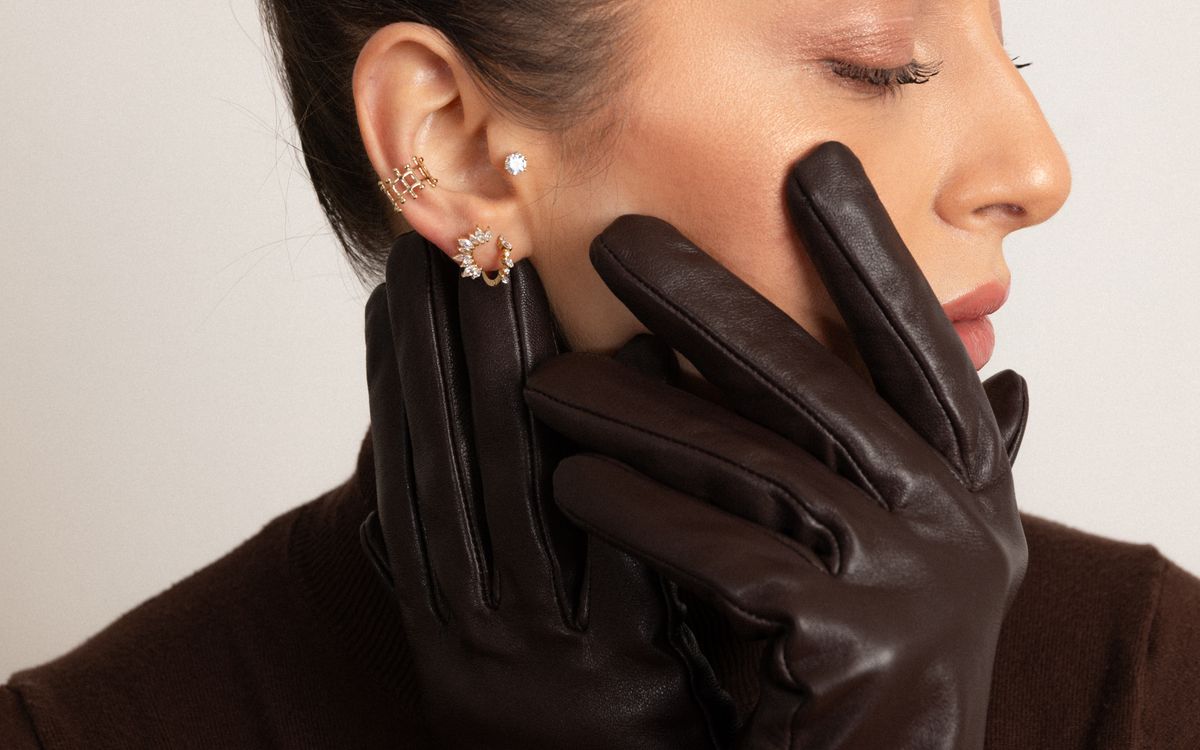
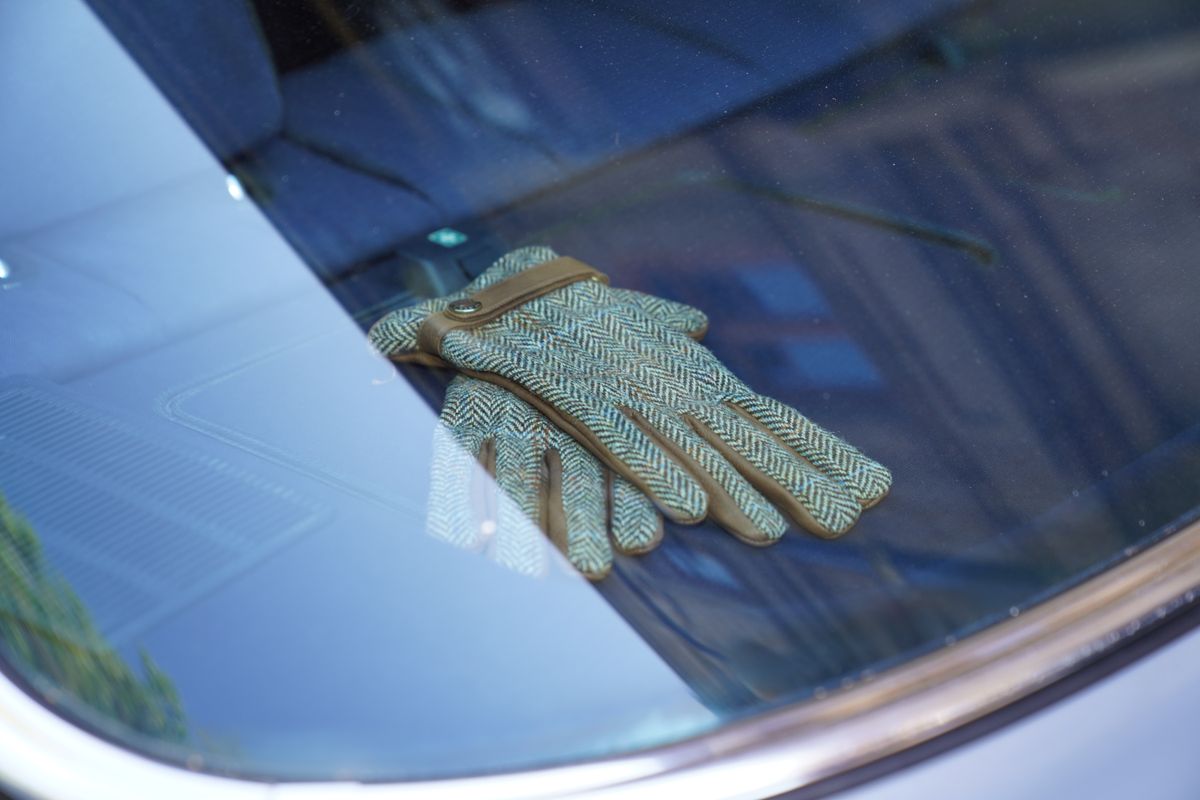
Leather-and-wool is the longest-established glove architecture for good reason: the materials divide the labor cleanly. Leather — typically deerskin, cowhide, or goatskin for gloves — blocks wind, sheds light rain, and resists abrasion at the palm; the wool lining insulates and manages the moisture that hands generate regardless of weather. A wool-lined leather glove is warmer than any unlined wool knit of comparable bulk in moving air, and it ages visibly: deerskin in particular softens and molds to the hand within a season.
The pairing has two watch-points. First, insulation lives in the lining, so the lining spec matters more than the leather species — a wool lining at fine merino grades is comfortable and warm; an acrylic pile lining is warm but clammy and mats with wear. Second, leather palms limit washability: the wool lining can be freshened only by airing or spot-cleaning, since water and heat deform hide. Unlined leather gloves, the dress standard, sit outside this guide’s scope entirely — they solve dexterity and formality, not insulation, and they are a different purchase logic.
Matching the glove to the winter
The failure modes are winter-specific and diagnosable. Hands go cold first at the fingertips, so glove length and cuff design decide as much warmth as knit weight: a long cuff that seals over a jacket sleeve blocks the chimney effect where warm air escapes up the wrist, and a ribbed or cinched cuff outperforms a plain rolled edge at the same yarn weight. Wet is the second failure mode — snowmelt and rain soak knits fast, and while wool retains most of its insulation when damp, a soaked knit glove takes hours to dry off a radiator, which is why wet-weather days belong to leather or shell exteriors.
| Conditions | Best construction | Notes |
|---|---|---|
| City winter, dry cold | Midweight fine-merino knit, long cuff | 18.5 micron or finer for all-day wear |
| Active use (walking, commuting) | Merino liner glove, fine gauge | Breathes with exertion; fits in a pocket |
| Sustained cold, wind | Wool liner + leather shell or mitt | Windproofing converts warmth into comfort |
| Wet snow, sleet | Shell mitt over merino liner | Wool insulates damp; shell sheds the water |
| Driving, brief exposure | Unlined leather or thin merino | Dexterity prioritized over warmth |
One spec-reading caution for the category: “wool gloves” marketed cheaply are frequently wool-blend or majority-acrylic, which changes both comfort and behavior — acrylic holds sweat against the skin and melts rather than chars near heat, and a blend’s micron count is untestable from the label. When the fiber line reads only “wool” with no percentage, treat the glove as a synthetic-leaning product. The habit of reading what a label omits before what it states runs through every fabric purchase, and it is formalized in the guide to reading fabric labels.
Care: keeping the knit and the leather separate
Wool glove care is sweater care at small scale. Wash by hand or on a wool cycle in cold water with wool detergent, never with heat or regular agitation — felting is the same irreversible scale-locking that shrinks any knit, concentrated in a garment shaped so precisely that even mild shrinkage ruins the fit. Reshape damp over a towel and dry flat; hanging a wet glove stretches the fingers. Between washes, wool’s odor resistance means airing does most of the work — a daily-wear merino glove needs washing only a few times per season.
Leather-palmed and leather-shelled gloves follow a different routine: no machine washing at all, occasional leather conditioner on the hide side, and airing to freshen the wool lining. Off-season, both styles store best clean and dry with cedar or lavender moth protection — fine wool attracts clothes moths as reliably as cashmere does, and a glove box is precisely the dark, undisturbed space moths favor. The full storage method, including what actually repels moths, is covered in the wool off-season storage guide, and the washing mechanics behind felting follow the same cold-water, low-agitation rules that protect any fine merino knit.
Frequently asked questions
- What micron count wool is comfortable in gloves?
- Because gloves sit directly on skin with no layer between, aim for merino at 19 microns or finer — under 18.5 is reliably soft for most wearers. Lambswool and conventional wool in the mid-20s micron range feel noticeably pricky after an hour of wear, which is why many traditional knit gloves rely on liners or a cotton blend to stay wearable.
- Are wool gloves warm enough for real winter?
- For walking and city winter, yes — a midweight merino knit at 200-300 gsm equivalents traps enough air for temperatures around freezing. For sustained cold, wind, or wet snow, wool works best as a liner inside a leather or shell mitt, where the outer layer blocks wind and the wool manages moisture. Wet wool keeps insulating, but it loses warmth faster than a dry glove would.
- Do wool gloves shrink in the wash?
- Yes, if washed with heat and agitation — the fiber scales interlock and felt, shrinking the glove beyond stretching back. Wash cold on a wool cycle or by hand, reshape damp, and dry flat. A small amount of lanolin-rich conditioner can restore hand feel; a felted glove, however, stays felted.