Twill, plain, and satin: how the three weaves decide how fabric feels
Almost everything a woven fabric does on the body — how it drapes, wrinkles, shines, resists snags, and fades — traces to one structural decision: how often the warp and weft yarns cross each other. Plain weave crosses at every opportunity, twill crosses rarely, and satin crosses as rarely as a stable fabric allows. This guide walks through each weave, the fabrics it produces, and how to read the weave from a product page or from the cloth in your hand.
Short answer
Plain weave locks yarns at every crossing: matte, stable, breathable, snag-resistant — poplin, oxford, chambray. Twill floats one yarn set over several of the other: dense, drapy, wrinkle-resistant, with diagonal lines — denim, gabardine, flannel. Satin floats yarns the longest for maximum surface shine — charmeuse, sateen. As crossing frequency falls, drape and shine rise, and durability shifts from tear-resistance to snag-resistance.
The single variable: interlacing frequency
In every woven fabric, the warp yarns run lengthwise on the loom and the weft runs crosswise. The weave pattern is nothing more than the schedule of which yarn passes over and which passes under at each intersection. Plain weave is the strictest possible schedule — strictly alternating, one up one down. Twill relaxes it: the weft steps over two, three, or four warp yarns at a time, creating the diagonal pattern. Satin relaxes it to the limit: individual warp yarns float across four, eight, or more wefts before a single binding point.
That one variable cascades. Where yarns cross frequently, the fabric is stable, stiff-ish, and full of tiny air gaps; where they float, the fabric packs more yarn per square centimeter, bends more easily at its few binding points, and exposes long yarn runs on the surface. Drape, density, luster, snagging, and fade behavior all follow from this — the same cascade that explains the concrete difference between chambray and denim, which are the same cotton in two different schedules.
Plain weave: the balanced grid
Plain weave’s strict alternation makes it the most balanced structure in weaving. Warp and weft appear in equal measure on both faces, the fabric looks the same from either side, and every yarn is anchored at every intersection, which is why plain weave tears with the most difficulty and resists snagging best — nothing sticks out to catch. The frequent crossings also leave visible interstices, the fabric’s built-in ventilation, which is why the lightest summer fabrics are nearly all plain weaves.
The plain-weave family covers a surprising share of wardrobes: poplin and broadcloth in shirting, oxford with its heavier filler yarns, chambray, taffeta, ripstop nylon, flannel’s base structure, and plain-woven wool suitings. The split between oxford, poplin, and broadcloth is a study in what yarn choice does to an identical grid, worked through in the oxford-versus-poplin comparison. Plain weave’s weaknesses follow from its strengths: the many crossings resist bending, so plain fabrics crease more readily than twills, and the balanced structure cannot reach the yarn densities a twill achieves at the same yarn fineness.
Twill: the diagonal and the floats
Twill’s stepping pattern — each weft yarn starting its over-under sequence one warp yarn along from its neighbor — produces the diagonal ridges, or wale lines, that identify every twill at a glance. Because the floats let yarn slide past each other rather than lock at every crossing, more yarn fits into the same area before the weave chokes. The consequences all point one direction: twills run denser and heavier for their thickness, drape and resist wrinkles better, block wind better, and hide soil in their textured surface.
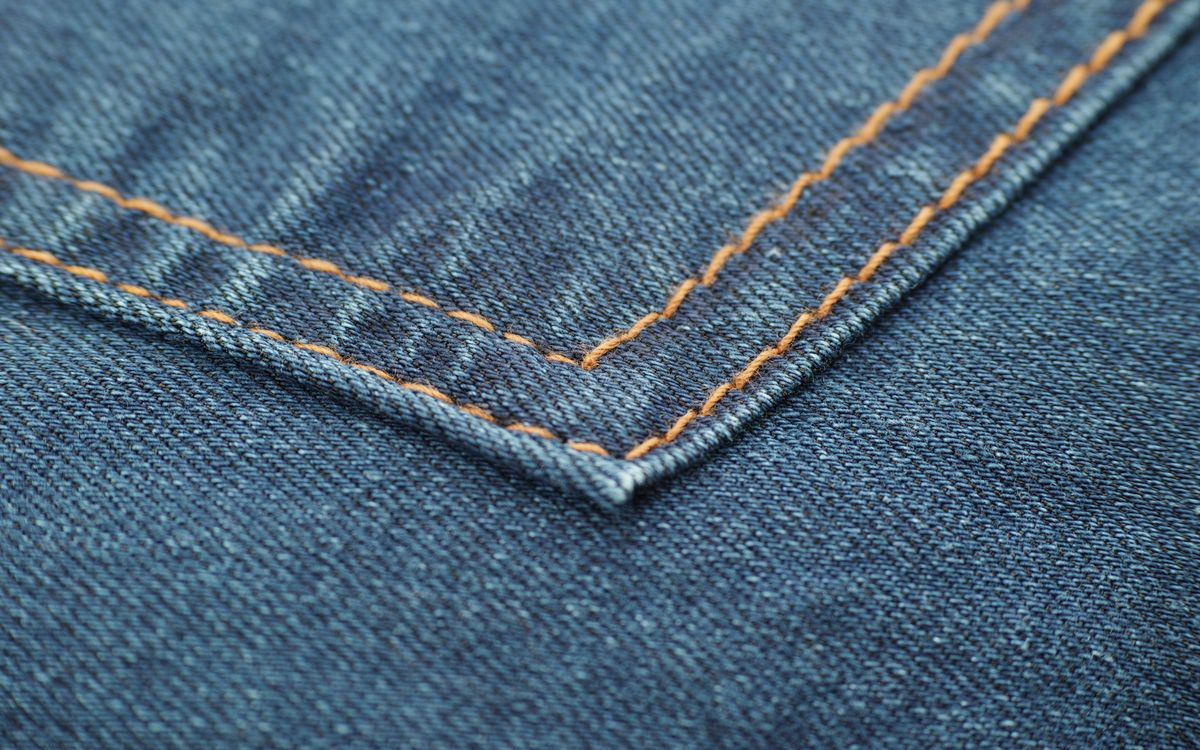
The float structure is also why denim fades the way it does. In a warp-faced 3x1 twill, the indigo warp yarns sit proud on the surface for three out of every four weft crossings, where friction slowly wears the surface dye away and maps the garment’s wear into pale lines. Plain weave cannot produce that pattern no matter how the yarn is dyed. Twill’s other signature risk follows from the floats too: long surface runs can snag on sharp edges, which is why fine suiting twills and wool gabardine pull threads more easily than a plain weave would.
| Property | Plain weave | Twill | Satin weave |
|---|---|---|---|
| Interlacing frequency | Every yarn, every crossing | Every 2-4 yarns | Every 4-8+ yarns |
| Surface look | Matte, even grid | Diagonal wale lines | Glossy face, matte back |
| Drape | Stiffest of the three | Good | Best |
| Wrinkle behavior | Creases most | Resists creasing | Shows pressure marks |
| Snag risk | Lowest | Moderate | Highest |
| Typical fabrics | Poplin, oxford, chambray, taffeta | Denim, gabardine, flannel, herringbone | Charmeuse, sateen, duchess satin |
Satin: shine engineered by float length
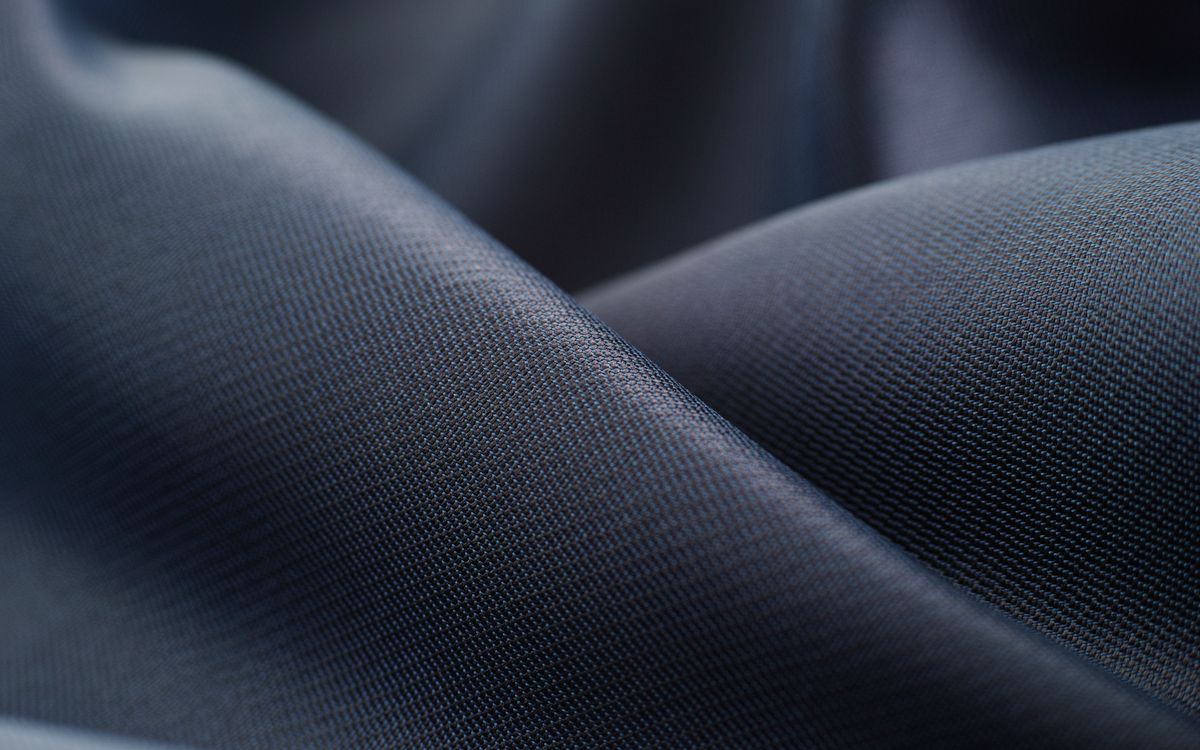
The satin weave is twill’s logic taken further: yarns float as long as the structure tolerates before a single crossing locks them down. Long floats mean long uninterrupted yarn runs on the surface, and long runs are what reflect light as a continuous sheen — the glossy face of a satin ribbon or a silk charmeuse blouse is a structural effect, not a finish. The back of the fabric shows the floats of the other yarn set and reads matte.
Because so few crossing points anchor the fabric, satin drapes fluidly and stretches a little under stress — and it snags and abrades more readily than either other weave, which is why satin garments are delicate by construction, not just by fiber. Two vocabulary distinctions matter here. First, satin is a weave, not a material: polyester satin, silk satin, and cotton sateen are all float-heavy weaves. Second, “sateen” specifically means the satin weave spun from cotton yarns, as in sateen sheets — glossy in structure, matte-matte in hand compared with true filament silk. Fiber and weave each contribute their own luster, and the two effects stack.
How weave and fiber interact
The weave sets the geometry; the fiber sets what the geometry feels like. The same plain weave is gauzy in fine cotton, crisp in linen, and papery in taffeta silk. The same twill is rugged in heavy cotton denim, springy in wool gabardine, and soft in brushed-cotton flannel. And the same satin weave is liquid in filament silk, slick and slightly louder in polyester, and only softly lustrous in spun cotton sateen — because filament yarns reflect light continuously while spun yarns scatter it at their fiber ends.
This is why weave labels tell you more than feel-adjectives do. A listing that says “cotton twill, 280 gsm” predicts drape, weight, fade behavior, and wind resistance before the garment is touched; one that says “soft luxurious feel” predicts nothing. The weave words that carry real meaning are the same ones decoded line by line in the fabric label guide.
Identifying the weave in person and on a page
In person, three checks take under a minute. Look for diagonals: visible wale lines at any angle mean twill. Check both faces: a fabric identical front and back with an even grid is plain weave, while a glossy front with a matte back is satin or sateen. Then hold the fabric to the light: plain weaves show pinpricks of light through their interstices, satins show almost none because their yarns pack over long floats.
On a product page, the weave word usually hides in the fabric name or description — “oxford,” “twill,” “sateen,” “chambray” are all weave disclosures, while “jersey” signals that the fabric is actually a knit and none of this logic applies. When the name omits the weave, the garment category usually implies it: dress trousers are twill territory, classic button-downs are plain-weave territory, and the pieces that straddle the line — shirting-weight twills, satin-backed crepes — are exactly where the listed weave matters most.
Which weave for which garment
The three weaves sort themselves into garment roles with remarkable consistency. Plain weave holds the shirting world — poplin dress shirts, oxford casual shirts, chambray summer layers — plus every lightweight summer woven and technical ripstop. Twill owns trousers and outer cloth: chinos, jeans, wool suitings, flannel, most coats. Satin lives where shine is the point: eveningwear, blouses, linings, and sateen bedding.
| Garment need | Best default weave | Why | Classic fabric |
|---|---|---|---|
| Crisp dress shirt | Plain | Stability, crease-pressing, smooth print surface | Poplin |
| Trousers that drape | Twill | Density, wrinkle resistance, abrasion | Gabardine, chino twill |
| Summer breathable layer | Plain | Built-in interstices, lowest density | Chambray, voile |
| Warm mid-season shirt | Twill, brushed | Dense base takes a nap well | Flannel |
| Liquid evening drape | Satin | Maximum float, minimum stiffness | Silk charmeuse |
The pattern within the twill family is worth following garment by garment: the chino-drill-gabardine spectrum shows how one diagonal schedule scales from summer cotton to winter suiting, as mapped in the trouser twill guide. Once the three schedules are familiar, most fabric names resolve into two facts — a fiber and a crossing frequency — and the behavior of the garment follows from those two facts before anyone touches it.
Frequently asked questions
- What is the practical difference between twill and plain weave?
- Crossing frequency. Plain weave interlaces warp and weft on every yarn, producing a strong, stable, matte fabric with more air gaps. Twill lets warp yarns float over two or more wefts, packing more yarn into the same area — so twill is heavier for its thickness, drapes better, resists wrinkles, shows diagonal lines, and fades characteristically because the floated surface yarns abrade.
- Is satin always made of silk?
- No. Satin is a weave, not a fiber. The satin weave — long floats with yarns interlacing as rarely as possible — produces the glossy face whether the fiber is silk, polyester, cotton, or wool. Fabric named 'sateen' is the same float-heavy weave done with spun cotton yarns, and a polyester satin gown and a cotton sateen sheet are structurally the same fabric.
- Which weave is the most durable?
- For the same yarn, plain weave is the most tear-resistant and abrasion-balanced, because every yarn is locked at every crossing — nothing floats to snag. But twill packs more yarn into the same area, so heavy twills like denim and gabardine outwear most plain weaves in practice. Durability is a yarn-and-density question; the weave decides how, not whether, a fabric wears.