How to dry linen without ironing
Linen’s crease problem has a narrow, mechanical cause: the fabric sets whatever shape it holds while wet and drying. That makes wrinkles a drying-stage problem, not a washing-stage one — and it means the fix happens with hands and a hanger, not an iron. The full routine below adds maybe three minutes of work per garment and removes ironing from the linen habit entirely.
Short answer
Linen creases set when wet cellulose dries in a pressed position, so the method is: wash in a light load with low spin, then shake the garment out hard, snap it, smooth every seam by hand, and dry it flat or hanging under slight tension with edges aligned. Steam or damp-smoothing rescues anything that still sets. Skip softener, never overdry, and hang rather than fold for storage.
Why linen creases: the cellulose memory
Linen is flax cellulose, and cellulose holds its shape through hydrogen bonds between adjacent molecular chains. Water breaks those bonds open; drying re-forms them in whatever position the fibers are currently sitting. That is the entire mechanism — a crease in linen is simply a new memory the fabric learned while wet. It explains every practical rule that follows:
| Condition | Effect on creases | Implication |
|---|---|---|
| Wet and pressed | Bonds re-form in the pressed position — crease sets permanently | Never leave wet linen crumpled |
| Wet and smooth | Bonds re-form flat — the garment dries smooth | Smoothing at the start is the whole method |
| Dry and pressed | Bonds barely move — dry creases resist smoothing | Fix creases while damp, not after |
The same chemistry explains why wearing linen creases it only lightly. Body movement keeps repositioning the fabric, moisture evaporates gradually, and the memory that sets is a soft one. It also explains why a dry, tightly folded linen shirt sprouts sharp shelf-line creases: the fold sat there for weeks, pressing the same line the whole time. Storage folds are set creases waiting to happen, which is why the last section of this article is about hanging.
The wash stage: what the machine contributes
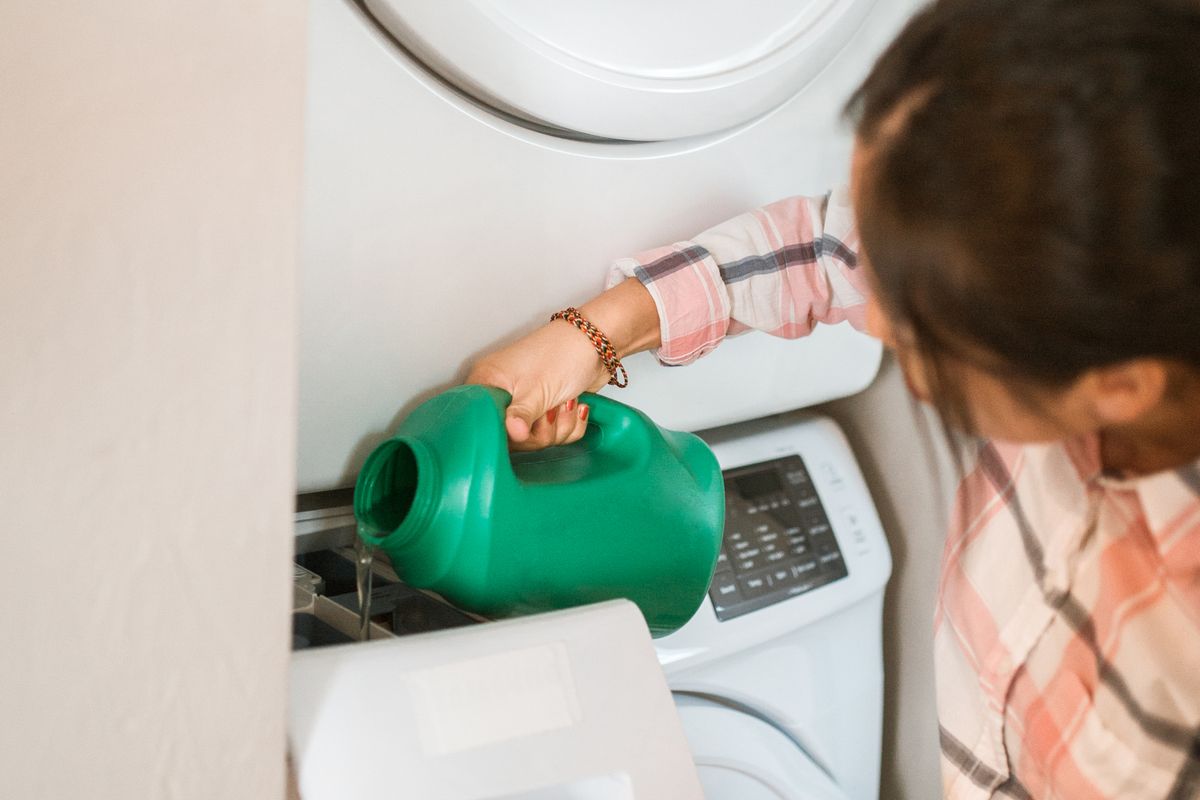
Drying gets the credit, but half the wrinkle load is decided in the machine. Wet linen takes an impression from whatever presses against it, and an overloaded drum supplies plenty of pressure. The settings that matter:
| Setting | Recommended | Why |
|---|---|---|
| Load size | Small — the drum half full at most | Less squeeze means fewer impressions set in wet fabric |
| Spin speed | Low (600 rpm or below) | A hard spin compacts wet linen against the drum wall in tight folds |
| Cycle end | Remove immediately | Wet linen left heaped in the drum sets heap-shaped creases |
| Softener | Skip | Coats the fiber, costs the crisp hand, does not touch the crease mechanism |
Detergent is ordinary — linen is a tough cellulose fiber and tolerates regular detergent fine, unlike wool or silk. The only real machine rule is gentleness of squeeze: the less pressure applied while the fabric is wet, the less there is to smooth out afterward. Whatever comes out of the drum should go straight onto the smoothing routine below, not onto a pile.
The smoothing routine, step by step
This is the core of the no-iron method, and it takes about two minutes per garment:
- Shake it out hard. Hold the garment by the shoulders and whip it once or twice, sharply, the way you would crack a towel. This alone breaks most loose creases and unsticks any surfaces that came out of the drum pressed together.
- Snap the hems. Grab the bottom hem and flick the garment downward with a snap. The trailing edge smooths the body of the fabric the way a flicked sheet smooths a bed. Do this once front, once back.
- Smooth by hand. Lay the garment flat or hold it taut and run your palms over every surface, pressing seams flat with your fingers. Seams are the stubborn spots — a seam sewn through three layers dries into a ridge unless it is pressed flat while wet.
- Align the shape. Square the hem, straighten the side seams, arrange the collar and sleeves into their worn shape. Whatever shape the garment holds while damp is the shape it keeps.
Then dry it in one of two ways. Heavy linen — tablecloths, wide trousers, anything over roughly 200 gsm — dries best flat on a rack or towel, smoothed once more as it goes down. Lighter linen dries hanging: clip it at the shoulders or the hem and add the trick that makes hanging work properly, which is tension.
Tension and weight: the two drying allies
A garment hanging freely still dries smooth if its own light weight pulls on it evenly — which is why shirts on hangers come out presentable. But the reliable version adds deliberate tension: clothespins gripping the hem, hanging so the fabric pulls downward against the clips. The damp fiber is stretched microscopically along its length as it dries, and the memory that sets is a taut, flat one.
| Drying method | Best for | Result |
|---|---|---|
| Flat, smoothed, edges aligned | Heavy linen, knitted linen, anything that would stretch on a line | Cleanest finish; the flat surface acts as a press |
| Hung with clipped tension | Shirts, dresses, lighter trousers | Good finish with gravity doing most of the work |
| Free-hung on a hanger | Anything dried in a hurry | Acceptable; expect creases at folds and seams |
| Tumble dry, stopped damp | Towel-textured linen, casual pieces | Loosens creases, then finish by hanging; never run to full dry |
Wherever the garment dries, dry it completely before it goes anywhere near a storage fold. Slightly damp linen folded into a drawer sets drawer-crease memories and, given a sealed drawer and a few days, can develop a mildew smell as well. Dry fully, then hang.
Rescue moves for creases that set anyway
Some creases get through — a garment forgotten in the drum, a bag packed for travel. The rescue ladder, from least to most effort:
- Steam. A handheld steamer passed slowly down the hanging garment relaxes the hydrogen bonds with moisture and heat, and gravity plus the fiber’s own springiness pull the crease out. The bathroom-shower version — hang the garment in a steamy bathroom for fifteen minutes — is the weaker, free equivalent.
- Damp-smooth. Mist the crease with water from a spray bottle until damp, smooth with palms, and let it dry flat or under tension. This is the original method applied locally, and it handles most shelf creases.
- Iron. The last resort, and genuinely last: a damp cloth between the iron and the fabric, medium heat, working with the grain. Ironing works, but it flattens the slubby, uneven texture that makes linen look like linen, and once the routine above is in place there is little left for it to do.
Storage: hanging beats folding
Because dry linen still takes a slow impression, storage is the last crease source. Hang shirts and dresses on proper hangers; hang trousers full-length from the cuff by clip hangers. For pieces that must fold — heavy trousers, table linen — fold loosely along different lines each time, and refold when the drawer is opened. Rolling instead of folding distributes the curve across the fabric and leaves no sharp memory line at all. The same dry-smooth logic runs through the fabric itself: the weight classes covered in the linen weight guide determine how sharply any given piece creases, and the seasonal choices in the linen shirt guide lean heavily on that weight difference. For the washing symbols printed on a linen care label, the label decode guide explains which of them are rules.
Frequently asked questions
- Can linen go in the dryer without wrinkling?
- A short tumble on low heat with the load stopped while items are still slightly damp can actually loosen creases, because tumbling keeps the fabric moving instead of letting it dry in a pressed fold. The damage comes from overdrying: a hot dryer run to completion presses creases in harder than any wash did, and fully dried linen resists smoothing afterward.
- Why is my linen wrinklier after washing than after wearing?
- Wet linen is at its most impressionable, and a crowded washing machine supplies pressure from every direction — squeezed between other garments, compacted by the spin cycle, then left sitting in a heap. A lightly loaded machine, a low spin, and immediate removal at cycle end prevent the machine itself from being the biggest crease-maker in the routine.
- Does fabric softener reduce linen wrinkles?
- Not meaningfully. Softener coats the fiber and changes the hand — linen loses its crisp, dry feel and gains a limper drape — but the creases are set by hydrogen bonds in the cellulose itself, which a coating does not interrupt. Smooth drying does the work softener claims to; the trade is crispness for nothing.