Cotton socks by weight: what the grams decide, from dress to weekend
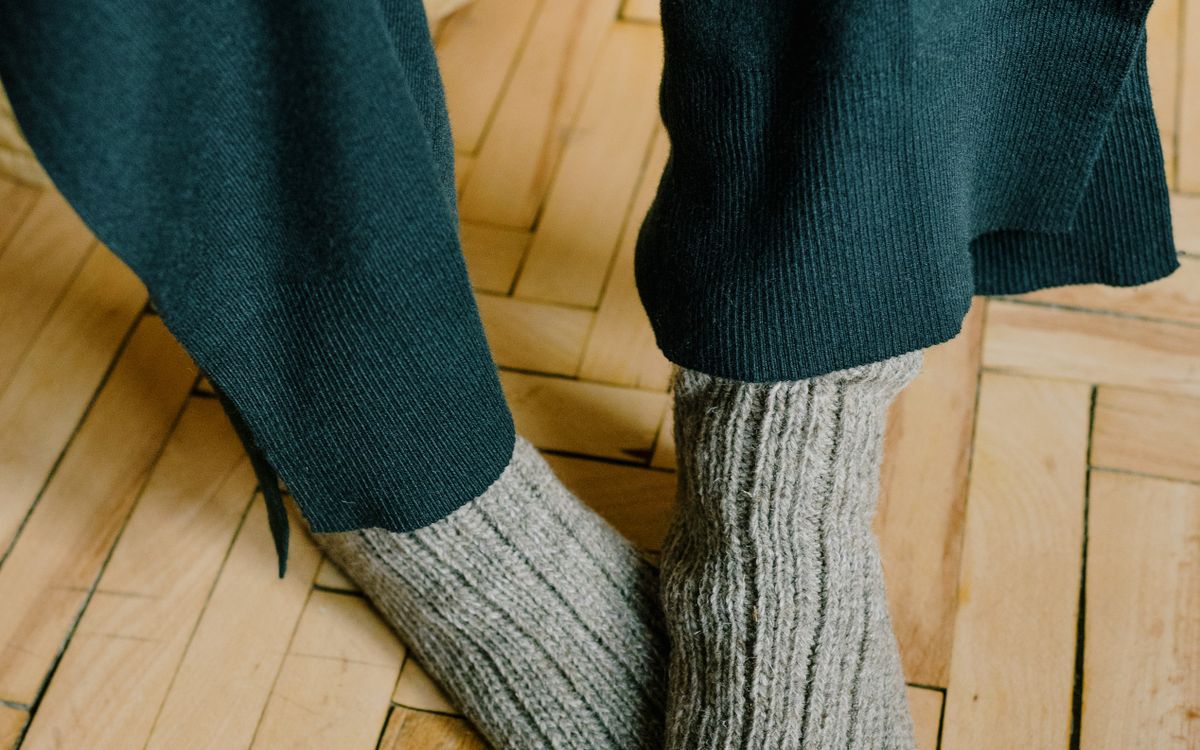
Sock packaging hides almost every spec except fiber content, yet weight — how much yarn is knit into each square centimeter — decides most of what a wearer notices: cushion under the heel, warmth inside a boot, whether the sock vanishes in a dress shoe or bunches in a hiking one. Because few brands print a grams-per-square-meter figure for socks, the skill is reading weight from construction cues. This guide maps the weight bands, the yarn blends that carry them, and the cuff and rib details that decide whether a cotton sock still fits in month six.
Short answer
Cotton socks run from roughly 150 gsm dress knits to 300+ gsm cushioned weekend pairs; the weight decides cushion, breathability, and how long the heel survives, while fiber blend decides recovery and moisture behavior. For daily wear, a midweight sock in a cotton-nylon blend with 2-5% elastane is the durable middle. For dress shoes, go lighter and smoother; for boots, go heavier with reinforced heel and toe. Weight and blend are independent axes — a heavy pure-cotton sock is warm but shapeless, and a light synthetic-heavy sock is durable but clammy.
The weight bands, and what each is for
Sock weight divides more coarsely than garment fabric, and the bands line up with shoe categories:
| Band | Approx. fabric weight | Feels like | Best use |
|---|---|---|---|
| Ultra-light dress | under 150 gsm | Smooth, almost sheer at the toe | Dress shoes, loafers, hot weather |
| Lightweight | 150-200 gsm | Thin but present; vanishes in shoes | Office wear, spring and summer daily |
| Midweight | 220-280 gsm | Distinct cushion under heel; sneaker standard | Everyday wear, autumn through spring |
| Heavyweight | 300+ gsm | Dense terry pile underfoot | Hiking, work boots, winter lounging |
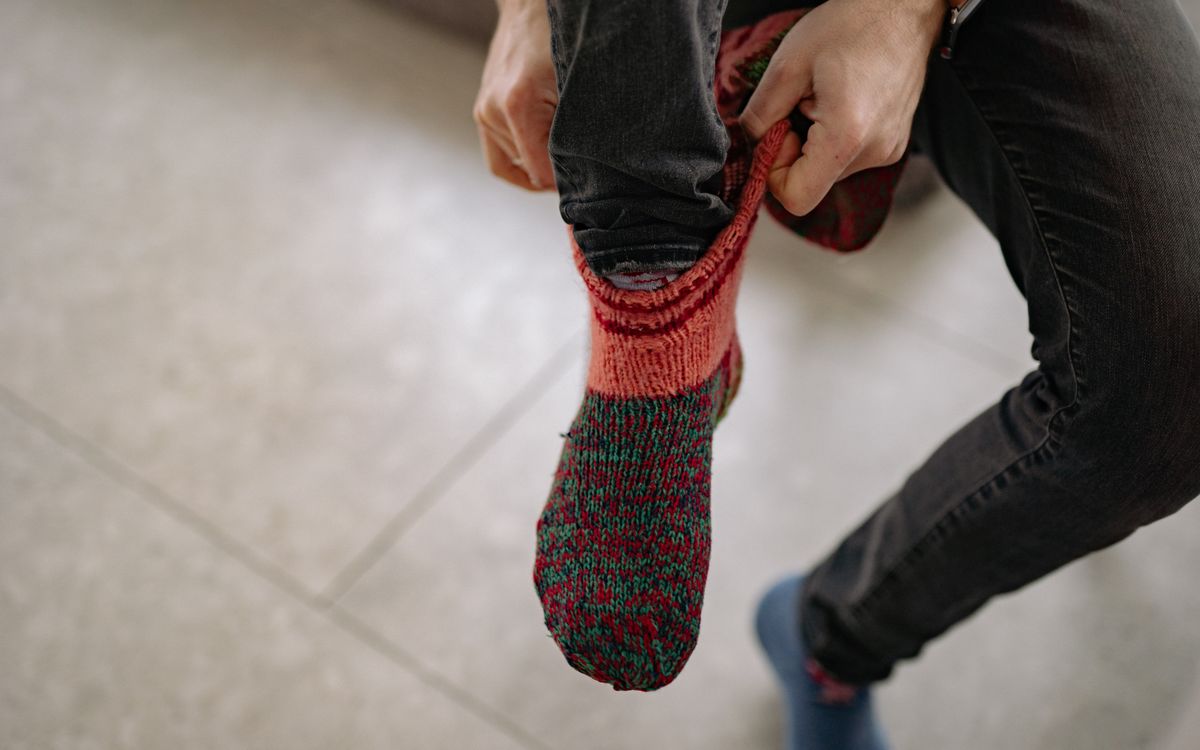
Two structural notes explain the felt differences. Cushion in heavier socks usually comes from terry loops knit into the sole — the same pile construction as toweling — while the top of the foot stays flat, so a 280 gsm sock is cushioned, not uniformly thick. And heel thickness is where weight earns its lifespan: a sock wears out first where the heel strikes, so heavyweight knits and reinforced heels both attack the same failure point.
Weight also sets the temperature envelope. A thin cotton sock breathes because there is little fabric to hold air; a 300 gsm terry sole traps air under the entire foot, which is warmth in January and a sweat problem in July. Cotton’s moisture behavior sharpens the seasonal split: the fiber absorbs sweat readily and releases it slowly, which is comfortable in cool weather and clammy during sustained exertion — the same absorption logic that separates cotton from merino in the merino sock guide.
Reading the blend: what the percentages mean
Cotton rarely works alone in a sock, and the content line is the most informative spec most brands actually print. Nylon or polyester in the blend supplies abrasion resistance — cotton fibers are short and break under the flexing a sock endures thousands of times a day, while nylon filaments survive the same abuse. Elastane (spandex), typically 1-5%, supplies recovery: it is why the cuff grips, why the arch band springs back, and why its absence is the reason pure-cotton socks slide down and bag at the ankle.
| Content line | What it signals |
|---|---|
| 100% cotton | Lounge or fashion sock; expect sagging, low durability, soft hand |
| 70-80% cotton, 15-25% nylon/poly, 2-5% elastane | The durable everyday standard; structure and recovery balanced |
| “Combed” or “long-staple” cotton | Smoother, stronger yarn; same blend can outlast ordinary cotton |
| Merino or wool listed alongside cotton | Warmth positioning; wool changes the moisture story entirely |
| “Bamboo” / viscose-heavy | Rayon-family fiber: silky hand, moisture behavior closer to cotton than to synthetics |
The blend read and the weight read interact. A lightweight sock with a high cotton share is the fastest-wearing combination on the shelf — little yarn to spare, and the yarn itself is the weak one. Nylon’s share matters most exactly there: the lightest durable socks compensate for thinness with a visibly higher synthetic content, sometimes over 40%, which is the trade a summer running sock makes knowingly.
Cuff, rib, and the architecture of staying up
A sock’s most common complaint — falling down — is a construction question, not a size question. The cuff is a knit-in band whose grip comes from ribbing plus elastane, and its design spans three types. A classic ribbed crew cuff grips evenly but presses a rib pattern into the skin; a “comfort” or loose-top cuff relaxes the tension, trading security for circulation-friendly wear that leaves no mark; and a true stay-up architecture, like a ribbed arch band under the instep, holds the sock’s body in place so the cuff itself barely needs to squeeze. Weight multiplies all of these: a heavy sock that slides down drags its whole dense pile with it, so heavyweight knits depend more on rib depth than midweights do.
Ribbing elsewhere does quieter work. The heel pocket is knit with shaped stitches so the heel cup matches the foot’s geometry; the toe is closed by hand-linking (a flat, smooth seam) or machine serging (a ridge that sensitive feet feel). Hand-linked toes appear across all weight bands but are worth checking specifically on dress-weight socks, where the sock sits against skin with no cushion between it and the shoe — the same smooth-finish logic that governs fine-gauge knitwear applies at ankle scale.
Matching weight to shoe and season
The mismatch failures are specific and diagnosable. A heavyweight sock in a fitted dress shoe overfills the shoe’s volume, changing the fit of a shoe sized without allowance — the result is pressure across the instep and a shoe that “no longer fits” when the sock is the variable. A ultra-light sock in a work boot transfers every seam of the boot directly to the foot, which is why boot wearers layer weight upward even in summer. The reliable pairings:
| Use case | Weight target | Blend target | Construction to check |
|---|---|---|---|
| Dress shoes, loafers | under 150-180 gsm | High cotton, smooth merino-cotton possible | Hand-linked toe, subtle cuff |
| Sneakers, daily wear | 220-280 gsm | 70-80% cotton with nylon and elastane | Terry cushion sole, ribbed arch |
| Hiking, work boots | 300+ gsm | Cotton-nylon or wool-nylon | Reinforced heel and toe, deep cuff |
| Summer heat | under 180 gsm | Higher cotton share for absorbency | Flat-knit top for breathability |
| Winter lounging | 300+ gsm | Cotton or cotton-fleece | Brushed interior, loose cuff |
The seasonal column deserves one honesty note: cotton is at its weakest in the summer-exertion case, where absorbed sweat stays against the skin inside a shoe. For all-day standing in heat, a lightweight cotton sock is comfortable; for sustained hiking in heat, the blend question matters more than the weight question, and synthetic or merino alternatives win on merit rather than marketing.
Wash behavior: weight decides the wear pattern
Cotton socks age in two dimensions — thickness loss and recovery loss — and weight determines which fails first. Heavyweight socks lose pile gradually, going from cushioned to merely dense over many months; their end-of-life is the classic heel hole, arriving late. Lightweight socks thin out faster where the shoe rubs and are more prone to tearing at the seam, so their lifespan is shorter even with gentle care. Recovery loss — the cuff relaxing and the arch band going slack — is driven mostly by heat and elastane quality, which is why the care advice is uniform across bands: wash warm or cool, and skip the dryer, since dryer heat is the fastest way to turn a fitted midweight sock into a loose one.
Lifespan economics follow from this. Two midweight cotton-nylon pairs rotated daily outlast four lightweight pure-cotton pairs worn in sequence, because nylon’s abrasion share does the work cotton cannot. When a weight number is published, it is the one spec on a sock package that actually predicts how the product ages — which makes it worth hunting for, even where most brands decline to print it. The broader habit of assigning fabrics to seasons by weight rather than by garment type is the organizing idea in the fabric-weight-by-climate map.
Frequently asked questions
- What weight are most everyday cotton socks?
- Most mass-market crew socks sit in a middle band that does not get published as a number: thin enough to wear in loafers, thick enough to feel present in sneakers. Where brands do publish fabric weight, lightweight socks run roughly 150-200 gsm, midweight around 220-280, and cushioned hiking-style cotton socks above 300 gsm. Published numbers are more common in running and hiking socks than in fashion ranges.
- Is 100% cotton good for socks?
- Not for anything beyond lounging. Pure cotton loses elasticity, sags at the cuff, and holds sweat against the skin once wet. Nearly every durable cotton sock blends in nylon or polyester for strength and a few percent of elastane for recovery — a 70-80% cotton share is typical of a comfortable, long-wearing sock, with the synthetics doing structural work the cotton cannot.
- Do thicker socks last longer?
- Generally yes, with a caveat. More yarn per square centimeter means a thicker pile to wear through before a hole opens, which is why heel and toe reinforcement does the same job locally. But yarn quality and knit density matter more than raw thickness — a loosely knit heavy sock pills and loses shape faster than a tightly knit midweight one.