Canvas tote bags are graded in ounces: fabric weight and coatings explained
Canvas is one of the few apparel fabrics sold by an ounce number most buyers never see on clothing labels, and that number — not the color or the print — decides how a tote bag carries, folds, and ages. The same is true of the coating, if the bag has one. Reading oz figures and coating names before buying turns a bag purchase from a style choice into a fabric decision.
Short answer
Tote canvas lives between 6 and 18 ounces per square yard, which converts to roughly 200 to 600 GSM. For daily carry, 10 to 14 oz is the workable band: stiff enough to hold structure, light enough to fold. Coatings trade breathability for weather resistance — waxed canvas ages into a patina, DWR beads light rain, and PVC fully waterproofs at the cost of stiffness and plastic feel.
Why canvas is measured in ounces
Canvas weight is stated in ounces per square yard (oz/yd²), a unit left over from sailcloth and workwear, where the fabric came from mills that graded cloth by weight per area. One ounce per square yard converts to roughly 34 grams per square meter, so the conversion between the two systems is simple arithmetic:
| Canvas weight | Approximate GSM | Common use |
|---|---|---|
| 4-6 oz | roughly 135-200 | Light shopping bags, printed totes, liners |
| 8 oz | roughly 270 | Everyday casual totes, book bags |
| 10-12 oz | roughly 340-400 | Daily-carry totes, market bags |
| 14-16 oz | roughly 475-540 | Grocery hauling, heavy-duty work bags |
| 18 oz and up | roughly 600+ | Duffels, upholstery-grade gear, floor cloth |
The ounce figure is a fabric-density claim, not a durability guarantee by itself — weave tightness and fiber quality matter too — but in the tote market it tracks closely with how the bag behaves under load. A fuller mapping of the weight bands across all fabrics sits in the GSM weight map.
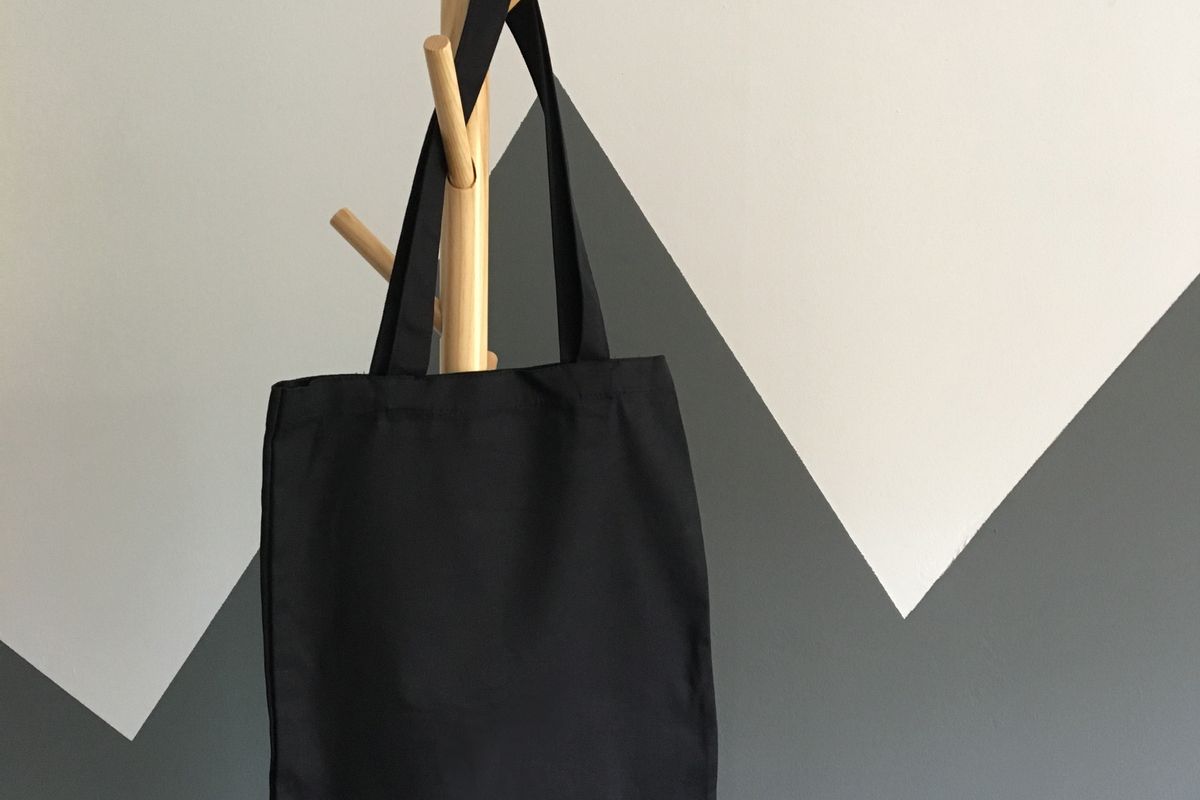
What each weight band actually carries
Load capacity is where ounce numbers become practical. Fabric strength rises with weight, but a tote fails at its seams and handle attachments long before the canvas body tears, so the useful comparison is between weight class and what the bag is asked to hold. Light canvas in the 6-8 oz band handles a change of clothes, a laptop sleeve, and a couple of paperbacks — call it five to eight pounds of cargo — while staying light enough to scrunch into another bag.
Midweights in the 10-14 oz band are the everyday workhorses. The fabric has enough body to stand on its own on a floor, so the bag holds its shape while being loaded, and the same body keeps books and boxes from digging through. Heavy canvas from 14 oz up is for groceries, firewood runs, and tool duty: the fabric barely flexes, the bag stands like a box, and the load limit is set by the handles rather than the cloth.
Coatings: wax, DWR, and PVC
Coatings change what a canvas bag can face. Uncoated cotton canvas breathes and absorbs rain like any cotton fabric; a coating sits between the fiber and the weather, and the three common types sit at different points on that trade:
| Coating | What it does | Trade-off |
|---|---|---|
| Waxed canvas | Wax saturates the weave; resists rain and wind, stiffens the cloth | Not machine washable; softens and creases with age; can mark light clothes when new |
| DWR (durable water repellent) | Chemical finish that beads water on the surface | Wears off over seasons; needs re-treatment; fabric still soaks through eventually |
| PVC or PU lamination | Plastic layer bonded to the canvas; fully waterproof | No breathability; stiff in cold; plastic hand feel |
Waxed canvas is the coating with a character arc. Fresh from the maker it is stiff and evenly waxed; over months of use the wax works into the fiber, creases set where the bag folds, and the surface develops the patina that waxed-gear owners prize. It cannot be machine washed — heat removes the wax — so care is spot-cleaning with cold water and re-waxing with a bar of wax when the fabric dries out. DWR finishes are lighter-touch: they keep drizzle off without changing the hand, but the finish is consumable, wearing off with use and washes.
PVC lamination is the workwear end: a genuine waterproof layer that suits beach bags and wet cargo, at the cost of everything waxed canvas offers. A PVC-coated tote wipes clean and shrugs off rain, but it also traps moisture inside the bag, ages by cracking rather than fading, and never softens.
Cotton canvas versus recycled polyester canvas
The canvas shelf now splits by fiber as well as by weight. Traditional cotton canvas — the duck cotton that defines the category — absorbs water, softens with washing, and fades into a lived-in look. Recycled polyester canvas, increasingly common in mass-market and technical bags, is hydrophobic by nature, holds its shape without any coating, dries fast, and resists abrasion sharply.
The fiber choice mirrors the rest of the wardrobe. Cotton canvas ages by softening and staining honestly; polyester canvas ages by keeping its surface intact. Cotton takes saturated screen-print colors and machine-washes without ceremony; polyester keeps printed graphics crisper over more cycles but melts if dried hot. Where weather matters, polyester starts ahead; where hand feel and natural-fiber sourcing matter, cotton does.
Handles, seams, and where totes actually fail
A tote’s failure points are predictable, and none of them are the middle of the fabric body. Handles go first — specifically, the stitch line where handle meets bag body, which carries the whole load through a few inches of seam. Reinforced construction shows up as boxed or cross-stitched handle attachments, doubled seam lines, or handle webbing that wraps under the base of the bag. A heavy 16 oz canvas body hung from two thin single-stitched handles is a bag designed to fail.
The base is the second weak point. Flat-bottom bags concentrate stress at the corners, and quality heavy totes respond with boxed corners, base reinforcement panels, or gusseted seams. Weight of fabric and quality of stitching have to be judged together: the ounce number describes the cloth, and the seam engineering describes the bag.
Reading a tote listing before buying
Product pages for canvas bags state more than most buyers check, and five lines cover the useful range. First, the oz figure — if the listing names a fabric weight, the maker knows the fabric matters; if it says only “canvas,” expect the light end. Second, fiber content, since “canvas” can be cotton, polyester, or a blend with different care and weather behavior. Third, any coating name — waxed, DWR, PVC — which decides both weather use and washing method. Fourth, handle construction language: reinforced, cross-stitched, webbing. Fifth, dimensions, because a 12 oz bag at 14 inches tall carries very differently from one at 18 inches.
The same five-line scan works for any garment or accessory listing, and the fabric label reading guide extends it into fiber content lines and care symbols. For the boundary question of when canvas leaves apparel territory and becomes home-furnishings fabric, the upholstery-grade apparel guide covers the dividing line between clothing-grade and furnishing-grade cloth — the line that 18 oz tote canvas sits right on top of.
Frequently asked questions
- What ounce canvas is best for a tote bag?
- For a grocery or book tote that carries real weight, 12 to 16 oz canvas is the standard range — heavy enough that seams and handles outlast the load. Lighter 6 to 8 oz canvas suits shopping bags and printed promo-style totes, where flexibility and foldability matter more than hauling strength.
- Does waxed canvas stain clothes?
- Freshly waxed canvas can transfer a little wax to light fabrics, especially in warm weather when the wax softens. The transfer fades with wear as the wax works into the fiber. Most makers advise letting a new waxed bag air out and settle for a few days, and avoiding pressing it against light-colored coats.
- Is heavier canvas always better?
- No. Beyond roughly 18 oz, canvas gets stiff, heavy when empty, and hard to fold, which works against a bag you carry daily. The right weight is the lightest one that survives the actual load — for most daily carry that is 10 to 14 oz, and for heavy grocery duty, 14 to 18 oz.