Tencel versus viscose: one fiber family, two processes
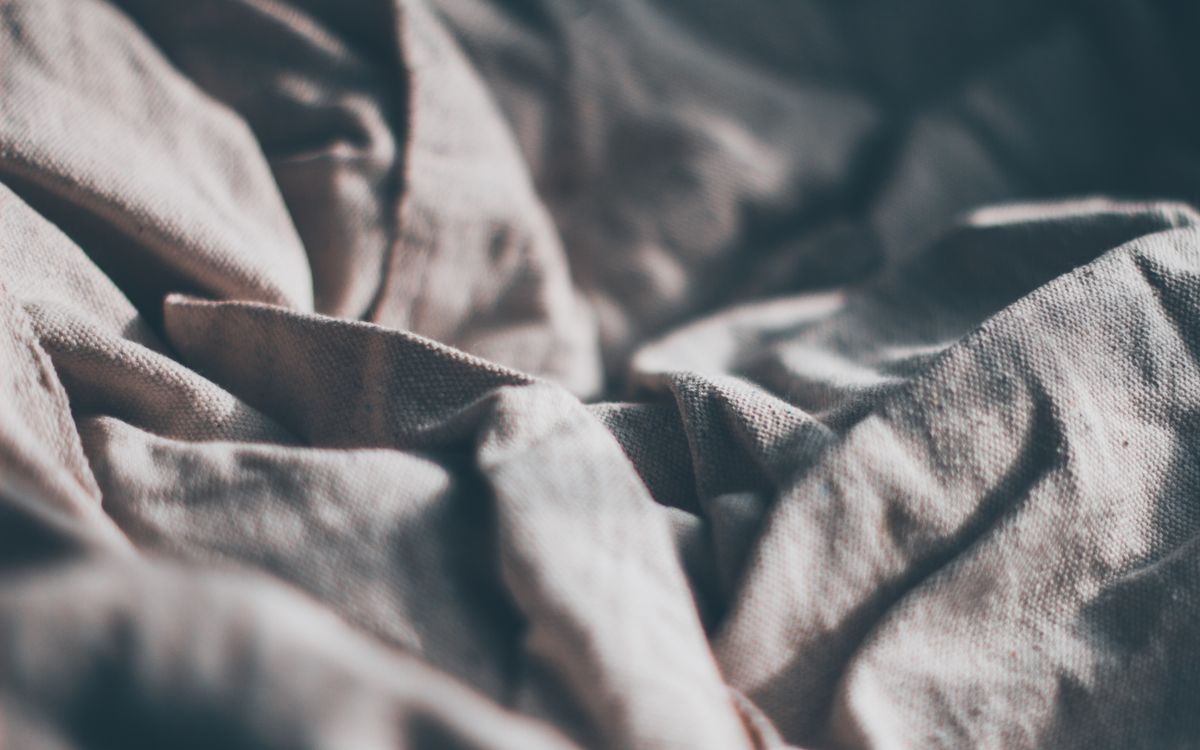
On a store rail, Tencel and viscose feel like close cousins — both fluid, both cool to the touch, both with that soft, low-static hand that neither cotton nor polyester quite reproduces. They are closer than cousins: both are regenerated cellulose, dissolved wood pulp re-formed into fiber. The differences that matter come from one thing only — the chemistry used to dissolve the pulp — and they show up precisely where a wardrobe meets a washing machine.
Short answer
Viscose and Tencel (lyocell) are the same fiber family, regenerated cellulose, split by process. Viscose uses carbon disulfide chemistry and loses a large share of its strength when wet, which is why viscose garments demand gentle washing and can distort or tear in a machine. Lyocell spins through a closed-loop NMMO solvent system, keeps most of its strength wet, and tolerates ordinary laundering far better. Drape and hand overlap heavily; the practical buyer difference is wet behavior and durability, and the label tells you which you are holding — “viscose” or “rayon” for one, “lyocell” or “Tencel” for the other.
The shared family: regenerated cellulose
Both fibers start as cellulose from wood pulp — viscose historically from beech and pine, lyocell often from eucalyptus — because cellulose is abundant but stubbornly insoluble in water and ordinary solvents. To spin it into fiber, the pulp must be dissolved, extruded through fine holes, and then re-solidified as continuous filament. That family tree explains everything the two fabrics share: the smooth cylindrical fiber surface, the fluid drape, the cool hand, the strong dye uptake, and the fact that both are genuinely plant-derived yet genuinely man-made — neither natural fiber nor synthetic polymer. It also explains why labels group them loosely as “cellulosic” and why the two feel similar enough that shoppers rarely distinguish them by touch. The natural-versus-synthetic map places the whole cellulose family in context between cotton and polyester.
Two solvents, two processes
The divergence is chemical. Viscose, commercialized in the early twentieth century, dissolves cellulose by treating it with sodium hydroxide and carbon disulfide, forming a cellulose xanthate that can be extruded into an acid bath where the cellulose regenerates. The process works at enormous scale, but the chemistry is harsh, the byproducts are genuinely hazardous, and the cellulose emerges with shortened molecular chains and a more open internal structure. Lyocell, commercialized in the 1990s, dissolves cellulose directly in a cyclic ether solvent — NMMO — with no derivative chemistry at all, and recovers and reuses the solvent in a closed loop, commonly cited at recovery rates above 99 percent. The cellulose emerges with longer chains and a tighter fiber structure, which is the root of every practical difference downstream.
| Step | Viscose | Lyocell (Tencel) |
|---|---|---|
| Dissolving agent | Carbon disulfide and caustic soda (derivative chemistry) | NMMO solvent (direct dissolution) |
| Molecular change | Cellulose chains shortened | Chains largely preserved |
| Solvent handling | Open chemistry, hazardous byproducts | Closed loop, solvent recovered and reused |
| Wet strength | Large share of dry strength lost | Retains most of its dry strength |
| Commercial era | Early 1900s onward | Mid 1990s onward |
Wet strength: the difference you actually feel
Dry, the two fibers are closer in performance than any marketing suggests. Wet, they part ways, and this is the single fact most worth carrying out of this article. Viscose loses a large fraction of its strength in water — conventionally put at around half — because water penetrates its open structure and lets the shortened cellulose chains slide past one another. A viscose garment pulled from a wash cycle is a garment at its weakest: heavy with absorbed water, low in tensile strength, vulnerable to stretching at shoulders and tearing at seams if tugged or wrung. Lyocell’s tighter structure resists that water penetration, so it keeps the great majority of its strength wet and survives a machine cycle that would punish viscose. The care consequences follow directly, and they are worth seeing side by side:
| Care situation | Viscose | Lyocell (Tencel) |
|---|---|---|
| Gentle machine cycle | Risky; expect shoulder and seam stretching | Safe on the delicate cycle |
| Hand wash | The preferred method | Fine, rarely necessary |
| Wringing out water | Never — wet strength is too low | Tolerable, though unnecessary |
| Drying | Flat, away from heat | Hang dry or low tumble |
| Creases after washing | Can set deeper; press lightly | Set shallow; recover with little ironing |
Viscose wants hand washing or a genuinely gentle cycle, no wringing, and drying flat; lyocell tolerates a normal delicate wash without ceremony.
Drape and hand on the body
Where the wash test separates them, the wear test mostly does not. Both fibers produce cloth with the fluid, semi-lustrous drape that neither crisp cotton nor slick polyester matches, and both feel cool at first contact because their smooth surfaces conduct heat away from skin faster than a fuzzy fiber would. At the margin, lyocell cloth reads slightly rounder and more substantial — its fibers are a touch thicker and smoother — while viscose reads softer and slightly more delicate, with a subtle tendency to pill where a strap or bag rubs the surface, a tendency rooted in the same short-chain structure that costs it wet strength. Viscose also breathes a little more readily through its more open structure; in a hot climate the difference is perceptible but slight. Garment weight matters more than fiber choice within this family, and ordinary weight-reading habits — fabric density, yarn thickness, stated gsm where given — transfer to Tencel and viscose garments directly.
What the label means
The naming has a logic worth knowing. “Lyocell” is the generic fiber name; “Tencel” is Lenzing’s trademark for its own lyocell, and a label reading Tencel lyocell names both the brand and the family. “Viscose” is likewise the generic name — the same fiber Americans often call “rayon,” a trade word for cellulosic filaments generally. Two adjacent names trip shoppers up. Modal is a variant of viscose with a modified process that improves wet strength partway toward lyocell — better than plain viscose in the machine, not equal to it. And “bamboo fabric” on a label is legally required to read as bamboo viscose or bamboo rayon, because the bamboo plant exists only as pulp before dissolution; the cloth is viscose in every practical sense. Anyone trying to decode a blended label — say, 62 percent viscose, 34 percent cotton — gets the full method in the fabric label reading guide.
The honest sustainability comparison
Lyocell’s closed loop is a real engineering difference, not a slogan: the NMMO solvent circulates through the process rather than leaving as waste, which removes the carbon disulfide exposure problem that has shadowed viscose production for a century. That said, both fibers carry the same underlying costs — forestry, chemical plants, energy — and neither is “natural” in the sense cotton is. The credible check on any manufacturer’s claims is third-party certification rather than prose on a product page, and the certification landscape — which seal covers the fiber, which covers the mill, which covers the finished garment — is unpacked in the fabric certifications guide. A shopper who wants the process advantage of lyocell should look for the certified fiber name on the label; a shopper buying plain viscose should at least know what the word understates.
Caring for each
The care gap is where the two fibers are least interchangeable. Viscose garments do best washed by hand in cool water with minimal agitation, or on the gentlest machine cycle inside a mesh bag, never wrung — squeeze water out between towels and dry flat, since hanging a water-heavy viscose knit stretches it visibly. Lyocell follows ordinary delicate-wash practice: cool or warm water, low tumble or hang dry, and the cloth returns to shape with barely any ironing because its creases set shallow. Both fibers resent bleach and respond well to ironing at moderate heat, and both dye deeply enough that dark colors hold. The practical summary: treat viscose as the fragile member of the family, treat lyocell as the dependable one, and let the care label — which reflects the fiber’s wet strength, not marketing — settle any remaining doubt.
Frequently asked questions
- Is Tencel the same thing as lyocell?
- Tencel is Lenzing's brand name for its lyocell fiber, the way one mill's product stands in for the whole category in shoppers' minds. Generic lyocell from other producers is chemically the same fiber made by the same solvent-spinning process. On a label, either word points to the same family.
- Why does viscose weaken when it gets wet?
- The xanthation chemistry that makes viscose spinning possible leaves the cellulose chains shorter and the fiber structure more porous than native cellulose. Water penetrates that structure and lets the chains slip, costing the fiber a large share of its strength. Lyocell's solvent process preserves longer chains and a tighter structure, so it keeps most of its strength wet.
- Is bamboo viscose actually bamboo?
- It is viscose made from bamboo pulp. The processing dissolves the source plant entirely and regenerates the cellulose as man-made filament, so the cloth is chemically viscose regardless of which tree or grass supplied the pulp. Labels are required to name it viscose or rayon, and 'bamboo fabric' is a marketing gloss on that.